


Strengthening Your Jaw for Dental Implants
If you have missing teeth and are on the path to dental implants, bone grafting may be a necessary part of your preparation. At Premier Smile Center in Fort Lauderdale, this advanced dental procedure is performed by our in-house periodontist Dr. Diane Alvarez, a specialist in the treatment of gum and bone tissue and the placement of dental implants.
What Is Bone Grafting?
When you lose a tooth, whether to periodontal disease, trauma, or extraction, a hole is left in the jawbone where the tooth root was once embedded. If this hole is not filled, the mouth will begin to collapse into the space and there is a chance that the area will not have enough jawbone available to hold a dental implant in place.
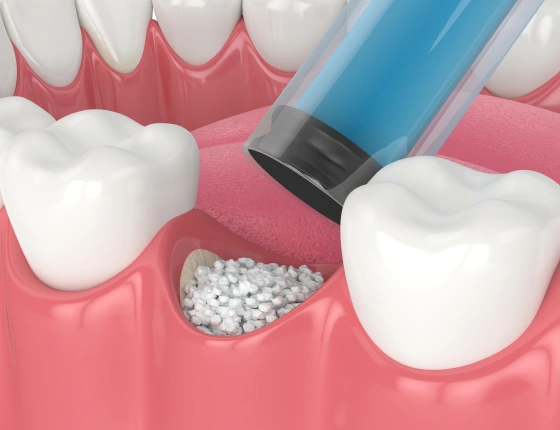
The process of bone grafting involves the removal of a piece of bone from another part of your body and transplanting it into the jawbone, though there are other options for bone replacement such as a cadaver or animal source or a ceramic-based graft. Once this process is complete, it will take several months for the area to heal and for the natural bone to grow and absorb the graft material for full integration so the placement of the dental implant can be supported.
It is critical to have a bone graft completed as soon as possible after a tooth is lost to minimize the intensity of this procedure and improve your chances of receiving a successful dental implant in the future. Bone grafting is a surgical procedure that repairs, rebuilds, and recreates the jawbone through the transplantation of bone and supporting tissues.
How The Procedure Is Done
There are different types of bone grafting and what your dentist chooses to use will depend on how much deterioration has occurred in your mouth and the location of the lost tooth.

A sinus lift is often carried out at the same time as a bone graft. When teeth are missing in the back of the upper jaw and not replaced, the sinuses can expand and end up too close to the area where a dental implant is to be placed. A sinus lift is a surgical procedure that opens more vertical space for an implant to fit.
When the hole in your jawbone is filled with bone particles, the area will be covered with a sterile bandage called a membrane. Your dentist will evaluate this area at subsequent dental visits over a period of months until the area is completely healed and ready to start the dental implant procedure.
Do You Need Bone Grafting?
A solid foundation is vital to the success of a dental implant. To compensate for bone loss beneath a missing tooth, it may be necessary to augment the jawbone to provide enough support for the post of an implant.
Bone grafting and dental implants are a sensitive, multi-stage process that demands the practiced hand of a specialist. If you are ready to replace your missing teeth, schedule a consultation with our periodontist Dr. Alvarez at our Fort Lauderdale dental office to find out the next steps for your dental restoration.